
Diving vs. Snorkeling on a Galapagos Cruise: Choosing Your Way Beneath the Surface
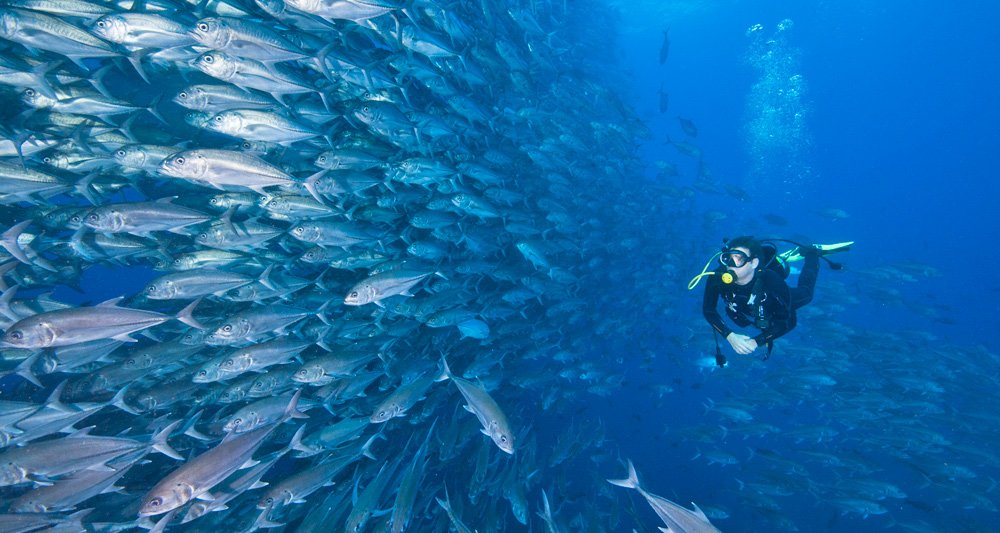
Diving vs. Snorkeling on a Galapagos Cruise? Sooner or later, every day in the Galapagos ends up in the water. A sea lion pup tumbles off a rock beside the panga, a turtle glides under the hull, and you are suddenly standing at a decision: mask and snorkel, or tank and regulator?
There is no wrong answer, but there is a right one for you. It depends on your experience, your comfort in open water, the wildlife you dream about, and how you want the days aboard to feel. Here is how we walk our own guests through the choice, and how a single boat, the Galaxy Diver II, makes it easier than you might expect.
The Short Version
Snorkeling is the heart of the standard naturalist cruise. It asks for nothing more than confidence in the water, and it delivers an astonishing share of the Galapagos story: sea lions, green turtles, rays, reef sharks, and even penguins, all within a few meters of the surface.
Scuba is a different kind of journey. It takes you down the walls, into the current, and out to the remote northern islands of Wolf and Darwin, where hammerhead schools and whale sharks gather. It requires certification and experience, and it is usually built around a dedicated dive yacht rather than a typical island-hopping cruise.
Galapagos National Park rules shape all of this. Most naturalist yachts include guided landings and snorkeling but do not offer scuba, and most dive yachts concentrate on dive sites. That is why we suggest choosing the type of voyage first, and the yacht second.
What You Will Meet Below the Surface
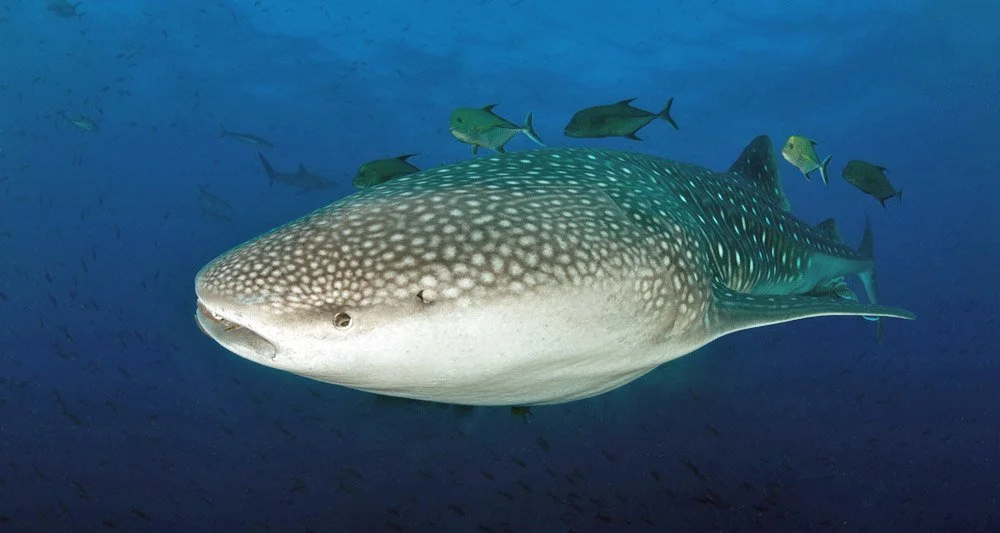
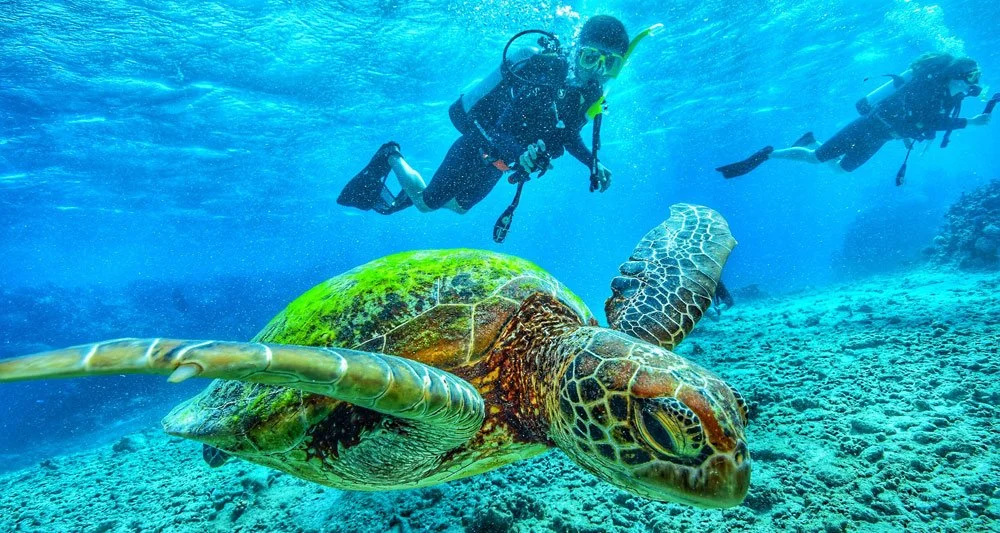
Snorkeling. The Galapagos is unusual because so much of its famous wildlife lives close to the surface, where cold, nutrient-rich currents push food upward. Snorkelers float alongside sea lions, watch hawksbill and green turtles graze, spot eagle rays and white-tipped reef sharks, and on the western side of the archipelago swim in the same water as penguins and flightless cormorants. Marine iguanas feeding in the surge are a sight few people forget.
Diving. Divers gain depth, time, and access. You can hang on a wall while hammerheads turn in the blue, hover at a cleaning station, or follow a channel far below snorkeling range. On northern routes between roughly June and November, experienced divers have a real chance of meeting whale sharks. The trade-off is that the voyage revolves around dive logistics rather than daily landings.
In both cases, the rules are the same: no touching, no chasing, no riding turtles, no standing on coral. Your guide briefs every entry, current, and exit before anyone leaves the panga.
Certification and Experience
For snorkeling, the requirement is simple: comfort in open water, a mask that fits well, and a willingness to follow your naturalist guide.
Scuba is where the bar rises. Day sites such as Gordon Rocks off Santa Cruz or Kicker Rock off San Cristobal typically call for Open Water certification and recent dives. The northern islands ask for much more. Expect Advanced Open Water or equivalent, comfort with drift diving in strong current, and a substantial logbook, commonly 30 to 50 dives or more.
On the Galaxy Diver II, divers should have at least 50 logged dives. Young divers from age 15 are welcome when accompanied by a certified adult while diving. Please bring your certification card and a logbook, and if it has been a while since your last dive, book a refresher before you fly. Wolf and Darwin are wonderful, but they are not the place to rediscover your buoyancy.
Understanding the Investment
The two paths are priced differently because they are different products. On a naturalist cruise, snorkeling is part of the daily program, with wetsuit rental the only likely extra. Scuba voyages cover tanks, weights, compressed air, specialist dive guides, and remote routing, so the cost per day is higher.
For the Galaxy Diver II, the 2027 rate for the 8-day diving itinerary is $8,200 per person, based on double occupancy, with a 50% single supplement and a 50% supplement over Christmas and New Year. Flights to Galapagos, park entrance fees, the transit card, alcoholic drinks, tips, and insurance are additional. Rates can change, so please confirm current pricing when you inquire.
Why Snorkelers Love the Naturalist Route
If this is your first visit, or you are traveling with family, a snorkel-focused voyage often wins on sheer variety. A single day might begin with a walk among nesting seabirds and end with an afternoon swim beside sea lions, no tanks, no dive computer, no pressure.
It also suits mixed ages and fitness levels. Guests who prefer gentle surface swimming still share the water with turtles, penguins, and rays. Naturalist guides manage entries from the panga and set a pace that fits the group, and you remain on the islands' classic rhythm of hiking, wildlife, and water.
Why Divers Come From Around the World
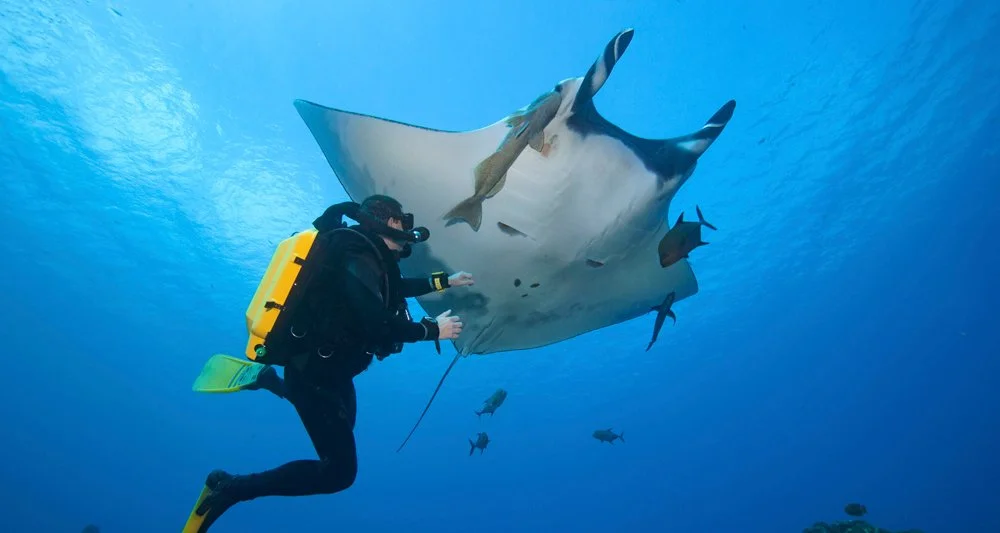
Some travelers come to the Galapagos for one reason: the blue water around Wolf and Darwin. Schooling hammerheads, silky sharks, manta rays, and, in the cooler months, whale sharks draw divers from every continent. These northern islands sit outside the standard naturalist loop, which is why they are reached only by dedicated dive yachts.
Closer to the main islands, Gordon Rocks and Kicker Rock offer exhilarating current dives for competent divers, but they are not places for a first-ever scuba experience. If your logbook is thin, build your skills elsewhere first, or enjoy the snorkeling now and return for the deep blue another year.
One Yacht, Two Ways to Explore: The Galaxy Diver II
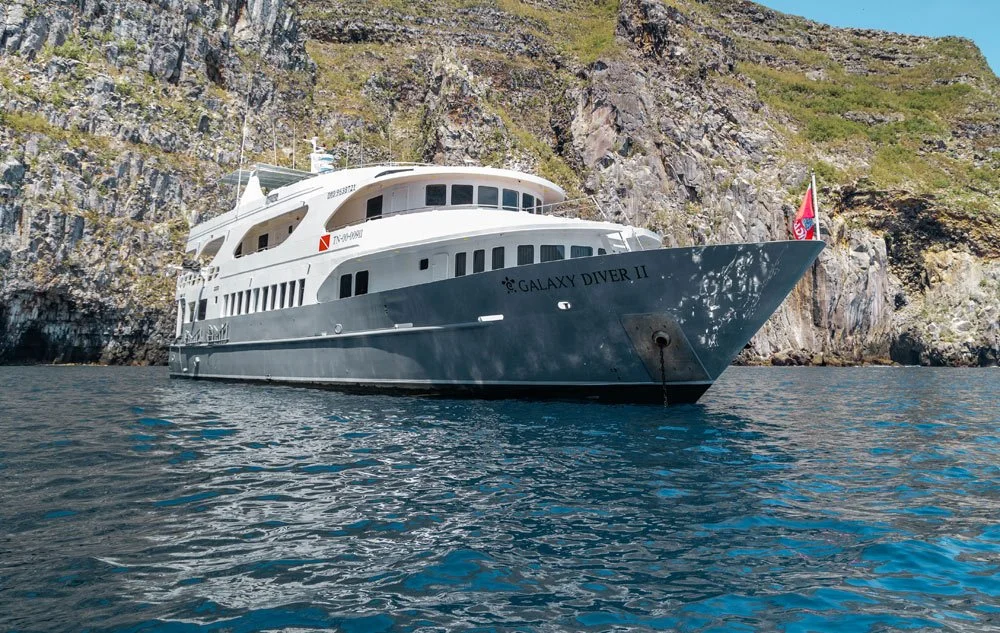


Many guests ask whether they can have both worlds in a single trip, scuba and full island exploration, every day. Honestly, a true hybrid is rare under park and operational rules. What we can offer is the next best thing: a yacht built for both journeys, on separate departures.
The Galaxy Diver II is a refined 97-foot yacht, renovated in 2024, with just eight cabins and room for 16 guests on naturalist departures and 14 on diving itineraries. Despite her name, she sails both eight-day diving expeditions and eight-day naturalist voyages, each reaching some of the archipelago's most remote and captivating corners. The small scale means unhurried service, quiet decks, and a crew who remember how you take your coffee by the second morning.
The Diving Itinerary: Northeast
This week is built around the far north. After a check dive on arrival, the yacht travels to Wolf Island for Shark Bay, La Banana, La Ventana, and El Derrumbe, then on to Darwin Island for El Arenal and Darwin's Arch, with a second day at each. The route returns south through Fernandina and Isabela before finishing near Santa Cruz.
Onboard, divers have two compressors, enriched air (Nitrox), aluminum tanks in 10, 12, and 15 liter sizes with both DIN and international fittings, emergency oxygen, an AED, and an electronic diver tracking system. Dive guides are certified specialists, and compressed air, tanks, and weights are included.
The Naturalist Itinerary: Northwest
For those who would rather spend the week above and just beneath the surface, the northwest route follows the western edge of the archipelago: Bachas Beach, Sullivan Bay, Rabida, Espinosa Point, Tagus Cove, Urbina Bay, Elizabeth Bay, Las Tintoreras, Floreana's Post Office Bay and Cormorant Point, the Santa Cruz Highlands and Charles Darwin Research Station, and North Seymour. Kayaks and paddleboards are included, and snorkeling happens daily.
Comfort Between Adventures
This is where the experience turns from adventure into indulgence. Cabins are generous, with the upper-deck matrimonial cabin measuring 187 square feet and twin cabins 169 square feet, most with wide ocean-facing windows. Each has a private bathroom with hot water, a hairdryer, and a towel warmer, a small luxury that feels remarkable after a morning in the surf.
Common spaces invite you to linger: an indoor dining area serving fine, freshly prepared meals, a bar, a shaded deck for lounging, and a sun-warmed solarium with a Jacuzzi, ideal for watching the islands slide by after a long day. Guests regularly tell us the food was a highlight, and that the balance of land and water exceeded their expectations.
A Smart Solution for Mixed Couples and Groups
One of the most common questions we hear is about travelers with different goals: one partner certified and hungry for hammerheads, the other happier with a snorkel and a hammock. Pushing a non-diver onto a demanding northern dive itinerary rarely ends well.
The Galaxy Diver II offers a graceful alternative. Choose the naturalist week for a shared, snorkel-rich voyage, then add dive days or a separate dive departure for the certified partner. Or, if both of you dive, simply book the northeast itinerary and enjoy the remote north together. If you are considering a dive departure with a non-diving companion, ask us about current rules and options for your dates before you book.
Fitness and Age
Snorkeling still asks for moderate fitness: climbing into a panga, swimming in light current, and getting out with wet gear. A well-fitted mask, a wetsuit matched to the season, and seasickness medication make a real difference.
Scuba adds equipment weight, equalization, and current management. If you have heart, lung, or ear concerns, speak with your physician before booking. Age alone is rarely the issue; experience and medical clearance matter more. Allow 18 to 24 hours after your last dive before flying.
Water Temperature and Currents
The cool season, roughly June to November, brings water of about 16 to 20°C (61 to 68°F), strong upwelling, and rich plankton. It is superb for wildlife and chillier on the skin, so divers often choose 5 to 7 mm wetsuits. The warm season, roughly December to May, brings water closer to 23 to 27°C (73 to 81°F), often with clearer conditions and lighter exposure gear.
Currents and thermoclines are part of the Galapagos signature. Conditions change by site and by the hour, and your guides will adjust or relocate when the sea is not right. That flexibility is one reason itineraries are always subject to change.
Which Is Right for You?
• First visit to the Galapagos: a naturalist voyage with daily snorkeling, then add dive days later if the bug bites.
• Certified, current, and chasing hammerheads: the Galaxy Diver II diving itinerary to Wolf and Darwin.
• A mixed couple: the naturalist week together, with dive days for the certified partner.
• Families: a snorkel-first itinerary, with age rules confirmed before promising any scuba.
• Underwater photographers: diving suits housed cameras and strobes, while compact waterproof cameras shine for snorkelers.
• Rusty divers: refresh your skills first, and save the demanding sites for when you feel sharp.
Frequently Asked Questions
Is diving or snorkeling better in the Galapagos? It depends on your goals. Snorkeling captures most coastal wildlife with no certification. Diving reaches deeper action and remote sites such as Wolf and Darwin. Many travelers enjoy both by pairing a naturalist voyage with dive days.
Do naturalist cruises include scuba diving? Generally no. Standard naturalist cruises include landings and daily snorkeling. Scuba typically requires a dedicated dive yacht or day dives from Santa Cruz or San Cristobal.
What do I need to dive Wolf and Darwin? Advanced Open Water or equivalent, solid current experience, and a strong logbook. On the Galaxy Diver II, divers should have at least 50 logged dives.
Can non-divers join a dive yacht? Sometimes, with limits on activities. Please ask us before booking so we can confirm what is possible on your dates.
How cold is the water? About 16 to 20°C in the cool season and 23 to 27°C in the warm season, with colder layers possible at depth in any month.
Should I bring my own gear? If you dive, bringing your own wrist computer, BCD, regulator, mask, snorkel, and fins is ideal. Your travel advisor can arrange rental when needed.
Plan Your Galapagos Dive or Snorkel Voyage
Tell us your dates, your certification level, your number of logged dives, and whether your travel companions will dive or snorkel. Our trip designers will match you with the right voyage, whether that is the Galaxy Diver II to Wolf and Darwin, a naturalist week, or a tailored combination.
Call (404) 971-8113 or inquire about the Galaxy Diver II